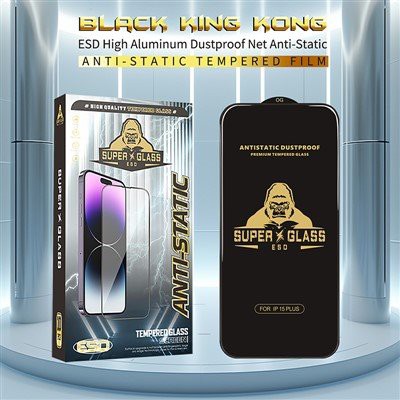
Mobile phone screen protectors are essential accessories for modern smartphones. Their design principles integrate knowledge from multiple disciplines, including materials science, optical engineering, and ergonomics, aiming to balance protection, light transmittance, and user experience.
From a material perspective, mainstream protective films are categorized into two main categories: plastic (such as PET and TPU) and glass (such as tempered glass). PET films achieve scratch and fingerprint resistance through multi-layer co-extrusion technology. The nano-oleophobic layer coated on their surface utilizes intermolecular forces to repel oil and water, reducing fingerprint residue. TPU films are known for their high elasticity and absorb impact energy through stress dispersion, making them suitable for drop resistance. Glass films rely on a chemical strengthening process, replacing sodium ions with larger potassium ions through ion exchange. This creates a compressive stress layer on the surface, significantly improving shatter resistance.
Optical design is a core technology in protective films. High-quality protective films must achieve a light transmittance exceeding 90% to minimize visual distraction. Manufacturers control substrate thickness (typically 0.1-0.33mm) and refractive index matching to avoid rainbow patterns or glare. Some high-end screen protectors utilize AR (anti-reflective) coatings, which use the principle of destructive interference to reduce ambient light reflectivity while maintaining color fidelity.
In terms of structural design, curved screen protectors utilize heat-bending technology, heating the flat glass to its softening point before laminating to the curved surface. UV adhesive is applied to the edges for enhanced adhesion. Privacy films utilize micro-louver optics, using a nano-scale grating structure to limit viewing angles and ensure privacy.
Furthermore, ergonomic design is reflected in the chamfered edges and electrostatic adsorption process. Rounded corners reduce the risk of scratches, while the electrostatic film prevents colloid residue through molecular polarity adsorption. These features together form a comprehensive technical system for screen protectors, from basic protection to functional optimization.