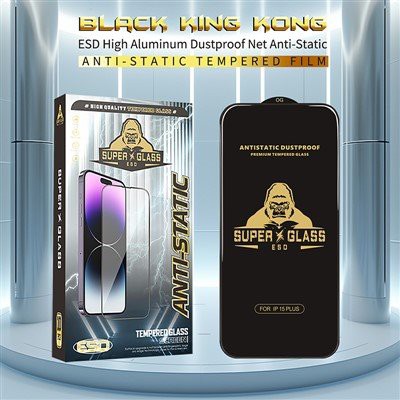
With the continuous expansion and popularization of smartwatch functions, the need for surface protection is gaining increasing attention. As a key accessory, smartwatch protective films must not only provide basic scratch and wear resistance but also adapt to complex usage environments, meeting users' comprehensive requirements for light transmittance, fit, and durability.
From a material perspective, mainstream smartwatch protective films are made of high-aluminum silicate glass or polyurethane (PU). The former utilizes an ion exchange process to enhance surface hardness, achieving a Mohs hardness of 7-9, effectively resisting scratches from hard objects such as keys and sand. The latter, however, excels in flexibility and impact resistance, making it particularly suitable for curved-screen devices, mitigating stress concentration during drops. Some high-end products also incorporate nano-oleophobic coating technology, which uses micron-scale embossing to reduce fingerprint residue while maintaining touch sensitivity.
In terms of optical performance, high-quality protective films generally boast a light transmittance exceeding 95%. Combined with low-reflection treatment, this significantly reduces ambient light interference, ensuring the color reproduction and contrast of AMOLED screens. For curved screen designs, the use of UV-curable adhesive and hot-pressing technology achieves a tight, edge-free fit without white edges or bubbles, eliminating the warping issues often associated with traditional screen protectors.
Functional innovation is also a key trend. Some products integrate blue light filters to reduce eye fatigue from prolonged wear through spectral modulation; privacy films utilize micro-louver optics to shield information from side angles. Furthermore, the introduction of self-healing material technology allows minor scratches to heal automatically at room temperature, further extending the lifespan of the protective film.
In summary, the technological evolution of smartwatch protective films reflects the deep integration of materials science, precision manufacturing, and user experience design. With the advancement of flexible electronics, these protective solutions will continue to advance towards lightweight and intelligent solutions.