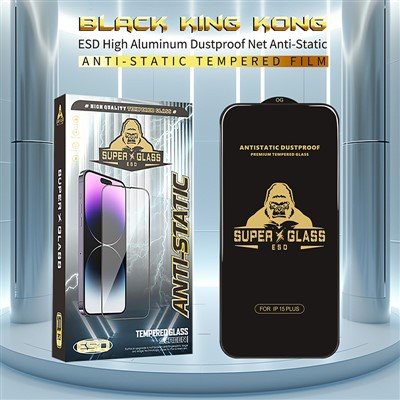
As an optical protective material, the production process for mobile phone lens protective film must balance light transmittance, wear resistance, and precise adhesion. The core process can be divided into four steps: substrate preparation, coating preparation, precision molding, and quality inspection.
Substrate preparation is a fundamental step. Typically, PET or tempered glass substrates with high light transmittance (≥95%) are selected. Ultrasonic cleaning is used to remove surface grease and dust, followed by plasma surface treatment to enhance coating adhesion. During this stage, the ambient humidity must be strictly controlled (≤30% RH) to prevent electrostatic attraction of impurities.
Coating preparation determines functionality. A scratch-resistant hard coating (such as a SiO₂ nanolayer) is deposited on the substrate surface using vacuum evaporation or magnetron sputtering technology, with a thickness of 3-5μm. Some high-end products also incorporate an AR anti-reflective layer or oleophobic coating. A UV-curable resin is evenly applied using a coater at a precision of 0.1ml/㎡. Subsequently, irradiation with a 365nm UV lamp results in instant curing (with a curing energy of 800-1200mJ/cm²). Precision molding relies on a die-cutting process. CNC punching machines are used to cut large rolls of material to lens specifications (typical diameters are 12-20mm). Mold tolerances must be ≤±0.05mm to ensure burr-free edges. For curved lenses, the diaphragm curvature is adjusted through hot pressing to match the 3D structure of the phone's lens module.
Quality inspection is a key step before shipment. A spectrometer is used to check transmittance compliance (≥92%), a haze meter is used to measure surface flatness (haze value <1%), and a simulated 5 Newton friction force is used to test the wear resistance (≥5000 cycles). The final product is packaged in a Class 100 dust-free facility to ensure contamination-free transportation.
This process, combining materials science and precision manufacturing, achieves a balance of optical protection and durability with 0.1mm accuracy, meeting the stringent lens protection requirements of smartphones.