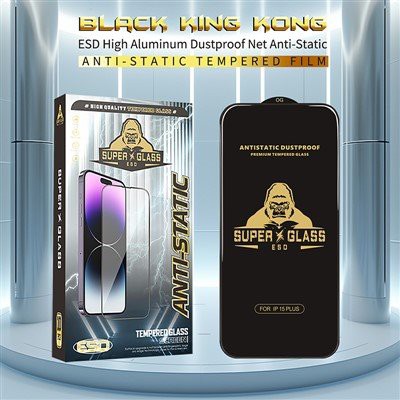
As a crucial protective component for electronic devices, the molding process for smartwatch protective films directly impacts their durability, light transmittance, and fit. Currently, the mainstream molding processes include injection molding, hot press molding, and UV curing, each with its own unique application scenarios and technical characteristics.
Injection molding is a fundamental process for large-scale production. It involves heating a polymer material (such as TPU or PET) to a molten state, injecting it into a precision mold, and then cooling it under high pressure to set the shape. This process offers advantages in high production efficiency and manageable costs, making it suitable for producing protective films for flat or simply curved surfaces. However, due to limitations in mold precision, it is less adaptable to complex watch case curvatures.
Hot press molding, after softening the film by heating, applies it to the mold surface using vacuum suction or mechanical pressure, creating a three-dimensional structure that closely matches the contours of the smartwatch. This method is particularly suitable for producing protective films for unusually shaped watch dials, achieving bubble-free, gap-free lamination. Modern processes often incorporate a graphite thermal conductive layer to improve heating uniformity to within ±2°C, ensuring stable material stress distribution. UV curing, an emerging technology, uses liquid photosensitive resins for rapid crosslinking and curing through ultraviolet light. This process allows for micron-level thickness control (typically 0.1-0.3mm) and supports the simultaneous application of functional coatings such as anti-blue light and oleophobic coatings. However, its disadvantages are high equipment investment and strict cleanliness requirements for the operating environment.
Future development trends will focus on multi-process composite applications, such as injection molding a base protective layer, then applying a buffer frame using heat pressing, and finally applying a UV coating to enhance surface hardness. This combined approach balances production costs while meeting the stringent protective performance requirements of high-end products.