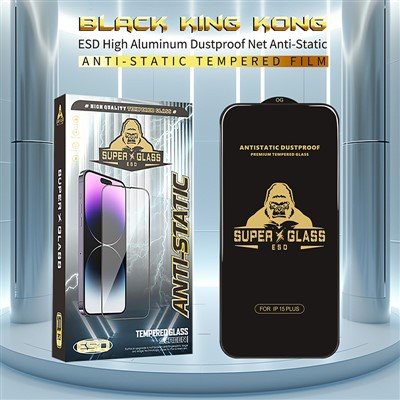
With the increasing intelligence of vehicles, in-car displays have become a crucial interface for driver-vehicle interaction, and the need for protective film is becoming increasingly prominent. As a key protective component, the performance of car screen protectors directly impacts user experience and device lifespan.
Optical performance is a key performance characteristic of car screen protectors. High-quality protective films require high light transmittance (typically ≥95%) to ensure a clear, undistorted display while also reducing reflectivity and minimizing glare in direct sunlight. Some high-end products utilize anti-glare (AG) or anti-reflective (AR) coatings to further enhance visual quality, especially readability in bright sunlight.
Abrasion and scratch resistance are directly related to the durability of a protective film. Cars are susceptible to friction from hard objects like keys and coins, so protective films require a high-strength substrate (such as PET or TPU), typically with a surface hardness of 3H to 9H, to effectively resist everyday scratches. Some products utilize nano-coating technology to enhance oleophobicity and stain resistance, preventing fingerprints and liquid damage.
Conformability and flexibility are equally important. Curved or shaped screens require protective films with excellent ductility to adhere tightly to the screen's edges while preventing bubbles or warping. Thermoplastic polyurethane (TPU) is a popular choice for curved screens due to its excellent elasticity. It also provides a cushioning function, reducing the impact of accidental bumps on the screen.
Furthermore, temperature resistance and environmental protection are crucial. Car screens are often exposed to extreme temperatures (-20°C to 80°C), so protective films must maintain stability to avoid yellowing at high temperatures or cracking at low temperatures. The use of environmentally friendly materials meets the non-toxic and harmless requirements of modern car interiors.
In summary, high-performance car screen protectors must balance optical clarity, physical protection, and environmental adaptability to meet the dual requirements of durability and user experience in smart cockpits.