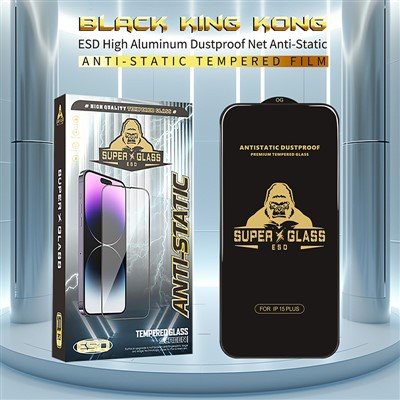
With the continuous advancement of smartphone photography capabilities, lens protective films have become an essential accessory for users' daily protection. However, the performance requirements for lens protective films vary significantly depending on the usage environment, and choosing the right film requires careful consideration of the specific scenario.
In everyday indoor environments, dust and minor scratches are the primary threats. Standard scratch-resistant lens films are sufficient, typically with a surface hardness of 3-4 hours, effectively resisting accidental scratches from hard objects like keys. These environments require high light transmittance, and high-quality films can achieve transmittances exceeding 95%, ensuring uncompromising image quality.
Outdoor environments place even greater demands on protective films. Direct sunlight can cause yellowing or glare on standard films, making UV protection a must-have. Some high-end films utilize special coating technologies to increase UV rejection to 99% while maintaining low reflectivity, making them suitable for extended outdoor shooting. Furthermore, dusty weather can accelerate film wear, so it is recommended to choose a composite film with more wear-resistant layers, which can achieve a scratch resistance rating of 6 hours or higher.
In humid environments, such as bathrooms or on rainy days, water stains can affect lens clarity. Hydrophobic coating technology addresses this problem. Films with water droplet contact angles exceeding 110 degrees can automatically slide off. Combined with anti-fog treatment, this significantly improves image quality in rainy conditions or in environments with temperature fluctuations. However, it's important to note that ordinary adhesives may experience edge warping after prolonged exposure to high humidity, so it's recommended to use integrated pressure-sensitive adhesives.
Extreme environments pose even greater challenges to protective films. High temperatures (such as in a car during the summer) can cause deformation in ordinary films, while heat-resistant materials can maintain stability at temperatures up to 80°C. Low temperatures (such as outdoors in winter) require films with uncompromising flexibility. Some products incorporate elastic polymers to ensure proper adhesion at temperatures down to -20°C.
The market currently offers specialized products tailored to specific scenarios, allowing users to choose the optimal solution based on their primary use. Professional photographers are recommended to pair with a multi-layer protective film set, while regular models with balanced overall performance can meet most needs. In the future, with the advancement of materials science, environmentally adaptive lens protective films may become a new direction for technological breakthroughs.